
Home » Blog
Top 10 Technical Papers From SIGGRAPH 2025 Vancouver (with paper links) We keep a close eye on the cutting edge of graphics research so we can bring the freshest ideas into our projects and keep our clients informed. The annual Special Interest Group on Computer Graphics and Interactive Techniques (SIGGRAPH) 2025 conference took place in
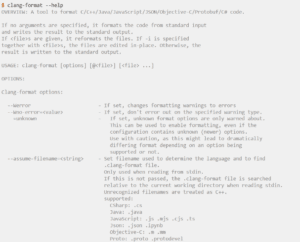
clang-format Style Guide Matrix and Summaries Have you ever tried to make sense of clang-format’s dozens of style options? Or tried to remember which one actually controls that one spacing quirk? Most guides out there just show examples without summarizing why one choice differs from another. We created a table that lines up the formatting
Shader Basics: Go from a Color Gradient to an Animated Mandelbrot in a GPU Shader in One Lesson To play with shaders, go to https://www.shadertoy.com/ and click “New” in the upper right (you can also create an account if you want to save your work as you play). It creates a new basic shader. void
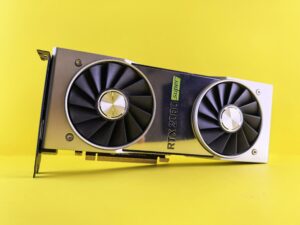
The definitive word on how to force selection of a discrete GPU in C/C++ code.
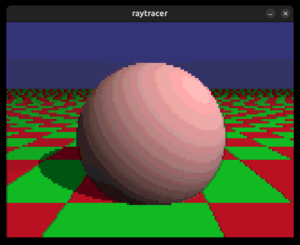
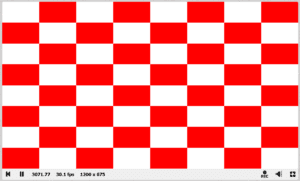
In part 5 of our raytracing port, we clean up the code a bit and then add camera/viewport animation and a checkerboard ground texture.
In part 4 of our raytracer porting blog, we fix the SDL event pump, add a PNG saver with libspng, remove the preset resolution limits and add a unit test using CTest.
In our OpenCV camera calibration tutorial, we show how to get started with OpenCV by setting up the software, printing and capturing a calibration chessboard, and then calibrate the camera using the captured images.
This article discusses prompt injection attacks, which target large language models (LLMs) by manipulating inputs to force unintended or malicious behavior. It explains how prompt injection works, various defense strategies like input sanitization and privilege minimization, and the challenges in securing LLMs. Real-world examples and prevention techniques are also covered.
How AlphaPixel created a 3D interactive visualization of Mars using CesiumJS, covering the technical aspects of rendering a virtual Mars globe in a WebGL-capable browser, including configuring ellipsoids, applying real-world data layers, and adding interactivity for dynamic Mars data exploration.