






















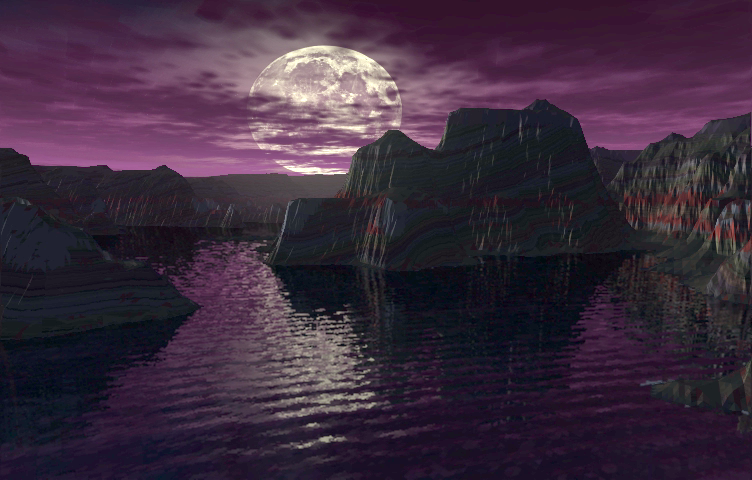
Did Gary Huber and I invent screen-space reflections in 1995?
In 1995, World Construction Set 2 on the Amiga rendered water reflections by marching rays through per-pixel data stored with its own rendered frame: the core of what’s now called screen-space reflections. Here’s the code, and the dated evidence.

Stop Vibing, Start Resonating: Pair Programming with LLM Agents
I’m going to coin a new term for AI/LLM assisted agentic pair-programming practices. Not Vibe Coding, but Resonance Coding. I’ll explain. Vibe and resonance are both vibrations. A vibe is unstructured, an uncontrolled sound that maybe happens to feel good. It’s the song you hear come on while you’re driving in the morning, unplanned and unexpected, the magic music that makes your morning mood. Resonance on the other hand is two systems tuned to the same frequency, each amplifying the other. A small, synchronized input produces a large, coherent output. That only happens when the systems are matched. In Resonance Coding,[…]
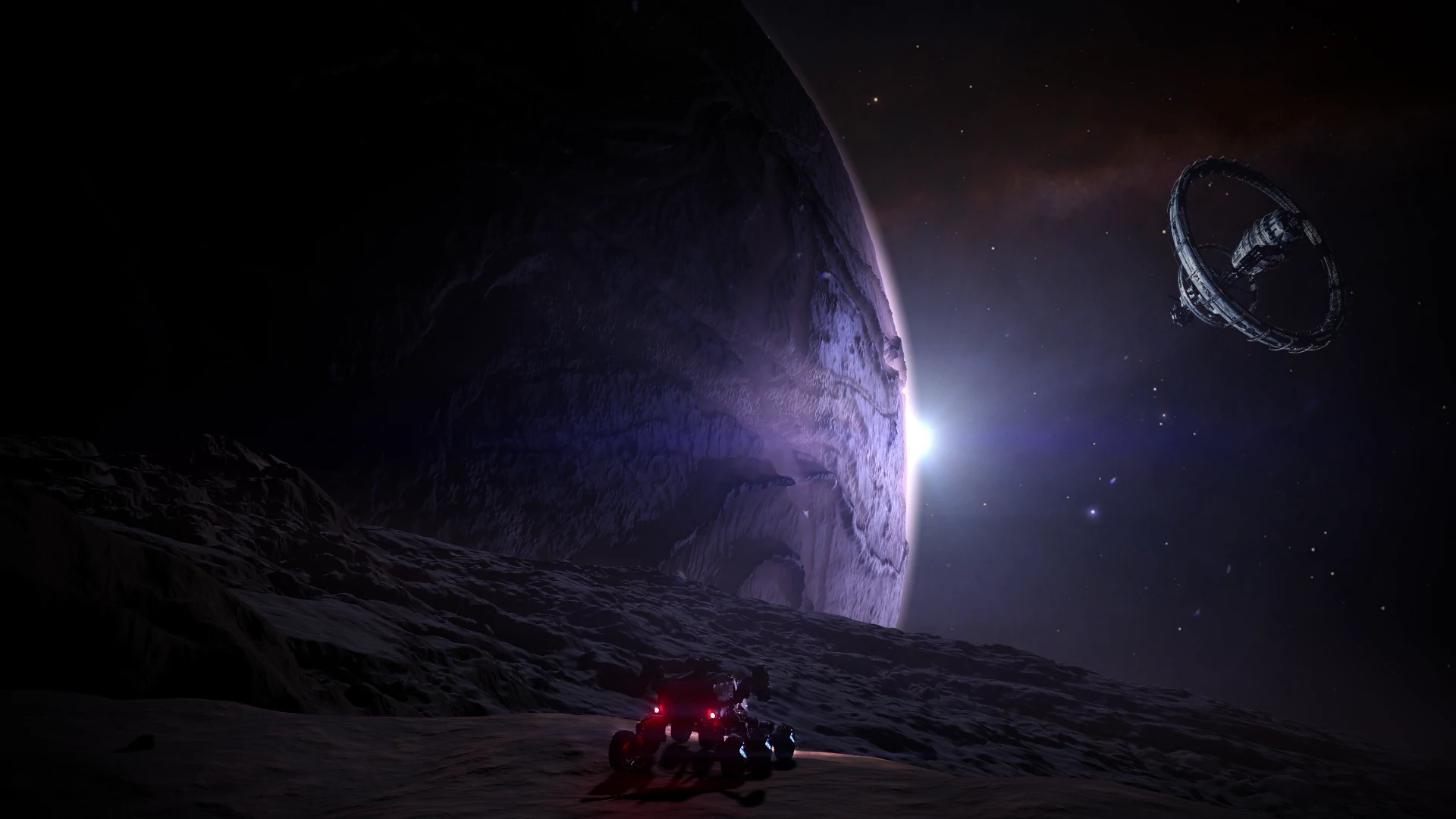
Celestial Vision Navigation, or: How I Found Where an Elite Dangerous Screenshot from 2015 Was Taken, Using Computer Vision
From 2015 to 2019 the Elite Dangerous: Horizons main menu showed an unlit wheel-shaped station that players tied to the Dark Wheel legend. I used frame stacking, plate solving and a Perspective-n-Point search against the Hipparcos star catalogue to find where its starfield was rendered.
SDF vs MSDF vs Slug vs Rive vs Texture Atlas: GPU Text Rendering Explained
How do I choose a text rendering algorithm between SDF, MSDF, Slug, Texture Atlas or Rive? Text looks simple until you have to draw it yourself. A letter is not a picture, it is a set of outlines: closed loops of straight lines and Bezier curves, filled according to a winding rule. Drawing that on[…]
